
Internships and Experiential Learning
The Department of Political Science is committed to helping students get hands-on experience applying what they have learned in the classroom to the real world. Internships with local elected officials and in government agencies and nonprofits are one of the best ways to make these connections.
Internships in the Riverside area also give students a chance to build professional networks and develop the practical skills they'll need after graduation. They help students stay engaged and increase their career readiness. And they help students and explore different ways to use a political science degree: not just law, but the many ways to follow a career in public service and policy.
Whether you are interested in public affairs, community engagement, or graduate school, an internship is a valuable way to bridge the gap between academic study and professional practice.
This page focuses on local internships. Other programs for Political Science majors that foster hands-on learning include the Loveridge Sacramento Fellowship program, Moot Court, UC Sacramento Center Internships, and the University of California Washington Program (UCDC). Students seeking to develop their research skills should also consider the Minority Serving Institution Research Academy (MSIRA).
The Political Science Local Internship Program
The Political Science local internship program at UC Riverside has two related components: internships with local government, nonprofit, and legal organizations, and a supporting academic course for students taking part in those political science internships.
The program stands out from others like it in two ways. First, the program has ongoing relationships with dozens of local organizations and offices that regularly host UCR students as interns. After interviewing applicants to the program, we help place students in these high-quality internships. (A few students who take part in the program find internships on their own. For more about this, see below.)
Second, students placed in internships by the program enroll in a full-fledged academic course, “Field Work in Political Science” (POSC 198 G).
The internship course incorporates readings, assignments and class discussions that help students think critically about their real-world experiences and develop professionally. The course also allows students to earn academic credit for their internship experience.
More than just an internship, the program encourages students to think critically about how political institutions work and helps them build the competencies they need for a successful career.
Through mentorship and guided activities, students learn to link theory with practice and gain a better understanding of the organizations that shape our public life.
Most students in the program are placed in local internships with the help of the faculty directors. But students may also find internships on their own. With the approval of the instructors, such students may also enroll in POSC 198G.
There are local offices and organizations that regularly host interns from UCR, but maintain their own separate application processes. For a list of such internships, please email one of the department academic advisors.
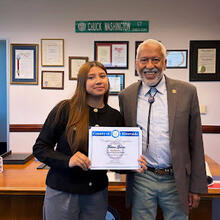
Student Testimonials

Skills You'll Build
Students in POSC 198G develop a variety of professional and civic skills, including:
- Workplace professionalism
- Written and oral communication skills
- Teamwork
- Interacting effectively with the public, clients and stakeholders
- Civic and community engagement
- Critical thinking and problem solving
- Networking and relationship building
- Career exploration and professional development
- Understanding and helping solve problems of clients and residents
- Policy implementation
- Program assessment
- Policy and legislative research
- Ethical decision-making and public service leadership
- Event planning
Placements: Where our local interns work
Specific placements change from quarter to quarter. But our students generally intern in one of several different kinds of offices or organizations:
- Elected officials
- Local government agencies
- Non-profit organizations
- Law and legal aid organizations
- Media organizations
Typical Intern Responsibilities
While every placement is different, common tasks include:
- Assisting with constituent and community outreach
- Supporting casework and client services
- Supporting public engagement initiatives
- Attending public meetings, hearings, and community events
- Assisting with program development, implementation, and evaluation
- Analyzing public policy issues and organizational challenges
- Supporting advocacy, education, and civic engagement efforts
- Conducting policy and legislative research
- Drafting reports, briefing materials, and communications content
These roles provide practical knowledge and transferable skills that complement your coursework.
Beyond the Classroom
The Political Science department is dedicated to providing learning opportunities that prepare students for engaged citizenship and meaningful careers. We encourage you to combine these internships with research, leadership roles, and faculty mentorship to get the most out of your time at UCR.
By getting involved, you'll develop more than just a resume—you'll gain a deeper understanding of democratic governance and the challenges facing our communities today.

How to be Admitted to the Internship Program
If you want to take part in the local internship program, keep an eye out for emails and social media announcements sent every quarter (Fall, Winter and Spring) from the undergraduate advisors alerting you to upcoming interviews. (Interviews for the Fall program take place the previous Spring; interviews for Winter take place the previous Fall; and interviews for Spring take place the previous Winter.) When you see an announcement, follow the instructions to sign up for an interview with one of the faculty co-directors of internships.
The vast majority of students participating in the program are placed in local internships with the help of the faculty co-directors. A small number of students find their own internships, and then seek to enroll in POSC 198 G in order to get course credit and take part in structured reflection on their internships. If you find your own local internship and want permission to enroll in POSC 198 G, let the undergraduate advisors know when you receive the quarterly announcement about upcoming interviews.
Get Ready for Internships
Well before the quarter in which you want to take part in the program, you should start preparing yourself for an internship. Start thinking about gaining experiences that help you prepare to be a good intern by: developing strong communication skills; learning to work both independently and with others on a team; getting better at interacting effectively and empathetically with the public; and just developing professional habits of following instructions, being on time and honoring commitments, communicating effectively and asking good questions.
But you don’t need to have had prior internship experience! You can also develop these skills through paid work and volunteer activities alike, both on campus or off campus.
If you need to work on the skills just mentioned, or if you just haven’t had many experiences that help you develop those skills, now is a good time to try something new.
Course Information
- Course Number: POSC 198G – Field Work in Political Science
- Typical units: 4 (faculty may approve more units under special circumstances)
- Prerequisite: Instructor Consent
- Repeatability: May be repeated once for credit.
- Eligibility: Open to Juniors and Seniors in good academic standing
- Course Format: Supervised professional experience with academic instruction and structured reflection
Questions?
To learn more about current openings, eligibility, and enrollment, please contact your advisor in the Department of Political Science. We are here to help you bridge the gap from the classroom to a professional career.